


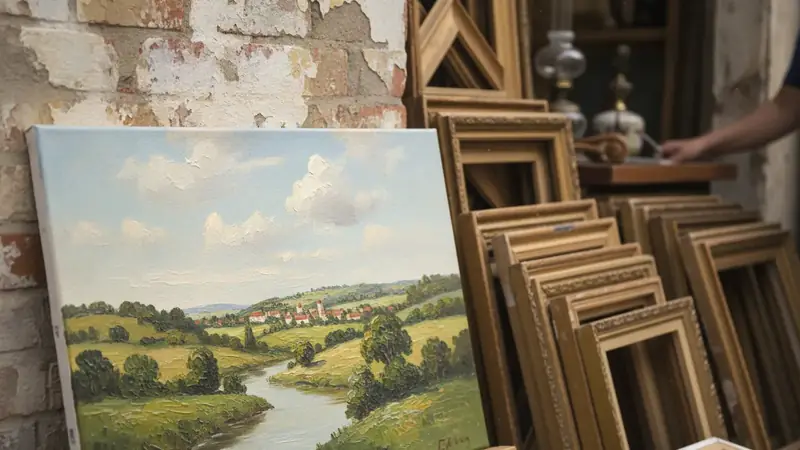
The quick answer on thrift-store art
Most framed art at a thrift store is a reproduction, often a machine-printed copy on paper or canvas. Those sell for little, and the frame can be worth more than the picture. Originals by known artists are the exception, and they are rare. The work below is about sorting one from the other fast.
Original or print: what to check first
Start with the surface. Tilt the picture under a light and look for brush texture: real paint has ridges, uneven thickness and shine that changes as you move. A flat, even surface with a glossy coat that looks the same everywhere suggests a print, sometimes with clear gel brushed on to fake texture.
- Canvas edges: on an original the paint often wraps around the stretcher bars, and the staples and canvas weave look hand-assembled. Printed canvases tend to have clean, uniform edges.
- Dot pattern: a 10x loupe on a printed area shows a regular grid or rosette of dots. Paint and hand drawing show no such grid.
- Paper works: check for a plate mark (a pressed rectangle around the image) on etchings and some fine prints.
Not every print is junk. A signed, numbered lithograph or screenprint from a listed artist can carry real value, so a print is not an automatic dismissal.
Signatures, edition numbers and labels on the back
A signature helps only if it is genuine and the artist is known. Printed signatures sit in the dot pattern; a pencil signature on a print, usually below the image, is a better sign. Fakes and decorative signatures exist, so a name alone proves nothing.
On prints, look for a fraction such as 12/150. The bottom number is the size of the edition; the top is that copy's number. Small editions tend to be worth more than large ones. Letters like AP mean artist's proof.
Turn it over. Gallery labels, framer stamps, exhibition stickers, handwritten titles and old inventory numbers are clues you can search. A label from a real gallery gives you a name and a place to start looking. A paper backing that was replaced may have hidden them.
A step-by-step way to price a painting
- Identify it. Note the artist's name if legible, the subject, the medium and the size. Photograph the front, the signature and the back.
- Check condition. Look for tears, flaking paint, stains, mold spots, cracks and sun fading.
- Look at current listings for the same artist, subject and size, and skip paintings that only share a similar scene.
- Adjust. Move your number down for damage, a missing frame or a weaker subject, and up for a good frame, a provenance label or a strong signature.
That last step is where judgment comes in, and it is why two similar-looking paintings can sit far apart in price.
How condition and other factors change value
| Factor | Effect on value |
|---|---|
| Original, known artist | Can be worth a lot more than a print |
| Mass-produced print | Usually low, often worth less than the frame |
| Signed, numbered limited edition | Higher than an unsigned print; small editions help |
| Tears, flaking or paint loss | Lowers value, sometimes sharply |
| Stains, mold or fading | Lowers value; restoration costs money |
| Original frame or gallery label | Can raise value and make selling easier |
| Large size, popular subject | Often helps, but not always |
What Price ID can do with a photo of your painting
Price ID works from a photo. Photograph the front, and you can add a text hint such as the artist's name or the word lithograph to focus the search. It then looks for visual matches and similar listings, and for used items it shows an estimated resale range with a typical price and example listings.
On iPhone and iPad, the art identifier app route is simple: look for What's It Worth: Price Scanner in the App Store and snap the picture. On Android, people searching for a painting value app will find it on Google Play as Price ID: What is This Worth?, where you can also share an image from another app straight into it.
The limit is plain. Resale numbers come from current asking prices on eBay, and a plain or unsigned painting may only turn up similar works, not the exact one. Price ID does not authenticate art or replace an appraiser. It is a way to get a sense of the market before you spend money or a weekend on research.
Asking prices, sold prices and appraisals are different numbers
Plenty of listings sit unsold for months, so asking prices run high. A sold price is what a buyer actually paid, and it is the better guide to what your painting would fetch. An appraisal is a professional's written opinion of value for a purpose, such as insurance, estate or resale.
These three can differ a lot. Price ID's estimate rests on asking prices, so read it as a ceiling-leaning range, then cross-check with completed sales wherever you can find them. A thrift store scanner is handy for a quick look at the shelf, but a quick look is all it is.
When to pay for an art appraisal
Pay when the stakes justify it: you think it is an original by a listed artist, a gallery label points to a known name, the signature matches a name with a real market, or you need a document for insurance, donation or an estate. Appraisers charge for their time, and some will not value by photo alone.
Before paying, try cheaper steps. Some auction houses offer a free appraisal of consigned items or a quick opinion from photos, though they may want to sell the piece. Be clear about whether you are getting a value for sale or a formal document. If you also hunt for antiques, an antique appraisal app can narrow down what is worth a closer look, though a person with the painting in hand has the last word.
Quick questions
How do I find out how much art is worth?
Start by working out whether the piece is an original, a print or mass-produced decor, then read the signature and any labels on the back. Next, compare it with similar works by the same artist in current listings and past auction results, and judge condition honestly.
Can I take a picture of a painting to identify it?
Yes, a reverse image search with a clear, straight-on photo of the whole painting often turns up the artist, title or near matches. Photograph the signature and any labels too, since those details help narrow results.
What is the best free app for identifying a painting?
Google Lens is a common free choice for matching a painting to an artist or title. Price ID is another option if you want a photo scan that shows used-item listings to compare, though its estimates come from asking prices and are not an appraisal.
What is the 70/30 rule in art?
The 70/30 rule usually refers to a common split of a sale price, where the artist keeps about 70 percent and the gallery keeps about 30 percent. Many galleries use a 50/50 split instead, so the terms vary by gallery and contract.
How much is this painting worth if it has no signature?
Usually little, unless the style, age or back labels point to a known artist. Unsigned decorative paintings often sell for modest amounts, so check the back for gallery labels or inventory numbers before deciding.
How much is this print worth if it is signed and numbered?
It depends on the artist and the edition size. A pencil-signed, numbered print by a listed artist is worth more than an unsigned poster, but an unknown signature adds little.