


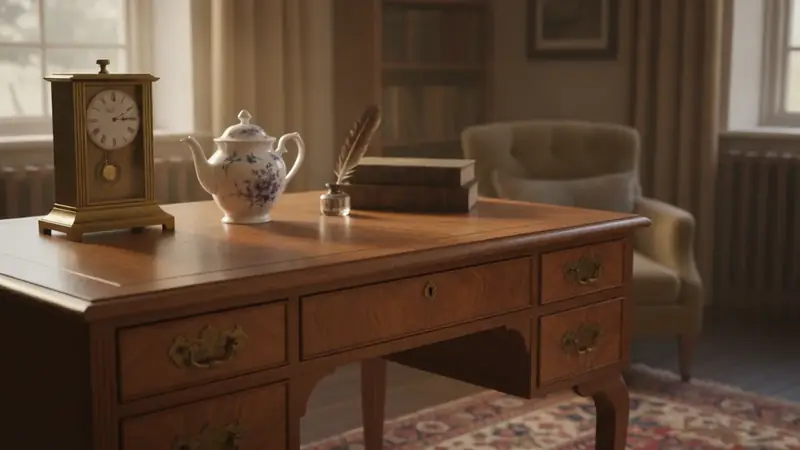
What actually identifies an antique
Before any app gets involved, know what the clues are. Most of them are physical, small and on the underside or back of the piece, which is exactly where people forget to photograph.
| Clue | Where to look | What it tells you |
|---|---|---|
| Maker's mark or backstamp | Base of plates, vases, figurines | The factory, and often a rough production period |
| Hallmarks | Near the edge, handle or foot of silver | Metal purity, maker, sometimes assay office and year |
| Hand-cut dovetails | Drawer corners | Uneven, widely spaced joints point to hand work, not a machine |
| Square nails | Back boards, drawer bottoms | Older construction, though old nails get reused |
| Patina and wear | Table edges, chair arms, underside of feet | Whether wear matches decades of real handling |
| Labels and stickers | Inside drawers, under seats, on the back of frames | Retailer, maker or gallery history |
No single clue settles it. A backstamp can be copied, and a reproduction can carry an old-looking label. You read them together.
How to photograph an antique for a good match
Start with the whole piece from the front in even daylight, no flash glare on glazed or silver surfaces. Then take the close-ups that matter: the backstamp, the hallmark row, a drawer corner, the label. Price ID takes a photo, a saved image or a screenshot, so you can also run a picture from a seller's listing.
Typing a short hint next to the photo steers the results. Typing something like "porcelain teapot" or "oak drawer chest" helps when the shape alone is ambiguous. Shoot one item per frame; a crowded shelf gives mixed results.
What Price ID returns for an antique
Price ID identifies the product with visual matches and AI, including brand and model when it is recognizable. For an antique that usually means naming the type and finding similar pieces instead of a single confirmed twin.
For used items it shows an estimated resale range built from current used-item asking prices on eBay, with a typical price and example listings. That is asking prices, not completed sales, so it is a ceiling-leaning view of the market. Buying prices and resale estimates appear separately.
Furniture is a good example. The furniture finder inside Price ID is tuned for home pieces, and a Toys & Collectibles finder covers smaller objects. Pick the one nearest your item.
Getting it on your phone
On iPhone or iPad (iOS 18 or later), look for What's It Worth: Price Scanner in the App Store; as an antique value app it gives you a limited number of free scans each day. On Android the Google Play name is Price ID: What is This Worth?, and it works as a free appraisal app for your first scan and a daily scan after that, with ads on the free tier. You can also share an image from another app straight to Price ID.
When a match is close but not exact
Antiques are where near-matches are most common. Handmade pieces vary from one to the next. A maker may have produced a pattern for fifty years, and the app cannot tell an early run from a late one. Unmarked or unbranded items may only get similar matches.
- A restored piece looks the same in a photo but sells for less than an untouched one.
- A reproduction can match a real listing closely.
- Age is not read from the image; a precise date needs the marks and construction.
Use the match to learn the name and the market, then confirm the details yourself.
Checking before you buy or sell
- Turn the piece over and read every mark, then compare it with the listings Price ID shows.
- Look at condition honestly: chips, replaced hardware, refinished surfaces, repairs.
- Check the asking-price range, then discount it, since nobody is promising a sale at those numbers.
- Save the find to a collection and set a reminder to re-check the prices later.
If you're after a painting, how much is this painting worth is a question with its own page, and the same goes for how much is it worth vintage when the item is a collectible and not a true antique.
Antique price guides and when to see an appraiser
An antique price guide gives you ranges by maker, period and type. Some are books, some are subscription databases, and paid price guide alternatives exist if you only need a quick look at current listings. None replace a person holding the object.
See an appraiser when the item might be worth real money, when it is for insurance, an estate or a dispute, or when authenticity is the question. A written antique appraisal carries weight that an app estimate does not, and an online appraisal from a professional still depends on good photos of the marks. Price ID is neither of those; it is a fast first look.
Quick questions
What is the free app that identifies antiques by picture?
Several apps let you identify an antique from a photo for free, usually with a daily scan limit or ads. They work by matching your picture to similar items, so they can suggest a type or style but cannot confirm age or authenticity. Price ID is free to try on iPhone and Android and shows matching listings and an asking-price range.
Is the antique identifier app legitimate?
Legitimate antique apps are honest about what they do: they match photos to similar items and show comparable prices. An app that promises an exact date, a maker or a guaranteed value from one photo is overselling, because those need marks, construction details and a human expert.
How to find the value of antiques for free?
Search for sold or listed examples of the same type of piece and compare condition, size and markings. Auction results, collector forums, museum collection databases and online marketplace listings are free sources. Asking prices are usually higher than what pieces actually sell for, so treat them as an upper guide.
What antiques are in high demand right now?
Demand shifts, but mid-century modern furniture, quality silver, vintage jewelry, art pottery and well-made wooden furniture with original finishes tend to draw steady interest. Heavy, ornate brown furniture has generally been softer in recent years. Condition and provenance matter more than the category.
Can an app tell how old my antique is?
No app can date a piece precisely from a photo. Age is judged from maker's marks, hallmarks, tool marks, joinery, materials and wear, which often need hands-on inspection. A photo match can point you toward a period, which an appraiser or specialist can then confirm.