


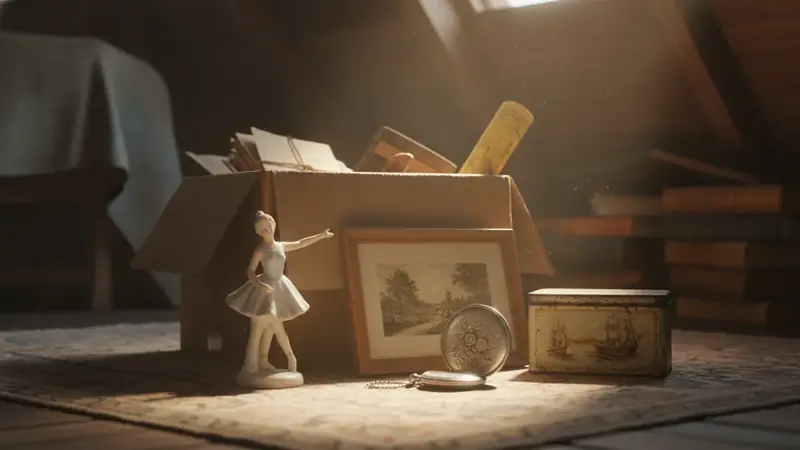
Start with what the object tells you
Most items give away their value in the first minute, if you turn them over. Flip it, open it, read the bottom. Work through the groups below and count how many boxes you can tick.
Signs something may be valuable
Marks and signatures
- Look for a maker's mark on the base, back or inside the lid, because a named maker gives you something to search for.
- Check for a signature or monogram, since signed work usually sells for more than unsigned work of the same style.
- Look for a stamp showing the country of origin, because it narrows the age and the factory.
Materials and build
- Feel the weight; solid metal, thick glass and real wood feel heavier than plated, molded or veneered copies.
- Look for hallmarks on metal, as tiny stamped numbers or letters often show the metal type.
- Check the joints and seams, because hand-finished joinery usually points to better quality than glued particleboard.
Age and rarity
- Note any dates, patent numbers or old addresses, because they set the earliest possible year the piece was made.
- Ask whether it was a short run, a limited edition or a discontinued model, since scarcity pushes up what collectors will pay.
- Be aware that old alone is not enough; plenty of old things were made in huge numbers and sell cheaply.
Completeness and condition
- Keep the original box, manual, case and accessories together, as buyers pay more for a complete set.
- Check for working parts, because a toy with its batteries corroded or a camera with a stuck shutter drops in price.
- Look for chips, cracks, stains and repairs, which cut value even on rare pieces.
Signs it probably is not worth much
- Many identical copies are listed right now, because plenty of supply keeps prices low.
- The mark is a generic phrase such as "made in China" with no maker name, so you have little to search for.
- The surface is crazed, stained, sun-faded or repainted, since heavy damage and later touch-ups hurt most categories.
- It is a mass-market reproduction, often with sharp modern printing or a perfectly even finish where old pieces show wear.
- It is missing a key part, such as a lid, a cord or half a set.
Low value is not a failure. A common item can still sell; it just sells for a modest amount.
How to find out what something is worth for free
You can do this in a few minutes, with no appraiser and no fee. Start by identifying the item, then see what people ask for it.
- Photograph it clearly, including any marks, and note the size and condition.
- Scan it with Price ID, which identifies the product and shows an estimated resale range from current used-item asking prices on eBay, with a typical price and example listings.
- Search listings yourself with the maker and model, and compare several of them.
- Match condition and included accessories before you trust any number.
Price ID works from asking prices, not completed sales, so the range is an estimate and not a guaranteed sale price or an appraisal. No brand on it? Then the closest results are lookalikes. If you have a barcode, scanning it is the quickest way in, and you can add a text hint to focus the search.
Checking by item type
Different things need different questions. For wall art, ask how much is this print worth by checking for a plate number, edition number and pencil signature in the margin. For records, ask how much is this vinyl worth by reading the matrix number scratched near the label and noting the pressing and sleeve condition. For general household finds, ask how much is this item worth by checking marks first, then comparing listings of the exact model.
If you are out hunting, what to look for at thrift stores is mostly this same list: marks on the base, real materials, complete sets and clean condition, checked before you reach the register.
Mistakes that cost people money
- Believing the first number you see; one hopeful listing proves little, so look at many.
- Confusing asking prices with what items actually sell for, which can sit lower.
- Cleaning or polishing an old piece before checking it, since you can wipe away patina or marks.
- Ignoring the missing parts, because a set without its box or pieces sells for less.
- Paying for an appraisal before doing any free research.
- Assuming a famous name on the item means it is genuine; copies carry names too.
Which tool helps with which item on the list
| Checklist item | Best tool |
|---|---|
| Identifying the item | Price ID photo or barcode scan |
| Rough resale range | Price ID estimate from used asking prices |
| Maker's mark and signature | Your own eyes and a close photo |
| Rarity and condition | Your own comparison of listings |
| Proven authenticity or insurance value | A professional appraiser |
On iPhone, a how much is this worth app like Price ID takes a photo, a saved image or a barcode. On Android, the what's it worth app is Price ID too, and you can share an image from another app straight into it. For items that might be truly old or rare, a dedicated antique appraisal app or a human expert is the next step once your free checks look promising.
Quick questions
What old stuff is worth a lot of money?
Items from known makers in good condition tend to bring the most, such as signed art, sterling silver, vintage watches, early toys with original boxes, and mid-century furniture. Rarity and condition matter more than age alone, since plenty of very old items sell for little.
What are the top 10 most expensive collectibles ever sold?
The top of the list is usually fine art, rare cars, historic watches, and rare stamps, coins, and trading cards. Exact rankings change as new record sales happen, so check a recent auction house record list.
Is an asking price the same as what an item is worth?
No, an asking price is what a seller hopes to get, while worth is better shown by what buyers actually paid. Sold listings give a more reliable guide than active ones.
How do I know if something is valuable?
Look for a maker's mark, a signature, real materials, age, rarity, and the original box or parts. Then compare it with current listings for the same item.
How can I find out what something is worth for free?
Scan it with Price ID for an estimated resale range, then search listings for the same model yourself. Both are free to try, though daily scan limits apply.
When should I pay for an appraisal?
Pay once your free checks suggest real value, such as a rare maker, a signature or a high listing range. A professional can also confirm authenticity, which an app cannot.