


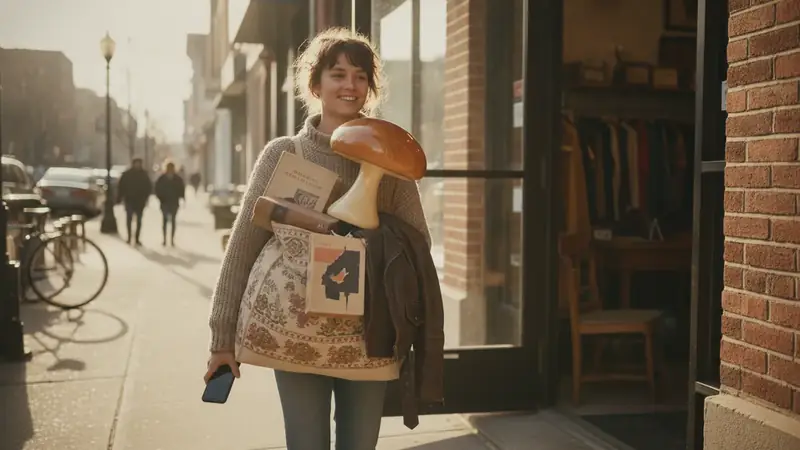
7:30 a.m., you pick categories before you pick a store
You don't walk in and hope. You decide on two or three categories to look at, because a thrift store is too big to scan shelf by shelf with a fresh mind.
Good categories to start with, and why:
- Shoes and sneakers: brand and model are printed inside, and buyers search by exact name.
- Handbags and small leather goods: a recognizable label carries most of the value.
- Electronics: working condition and included accessories decide the price, and both are easy to show in photos.
- Toys and collectibles: older lines and complete sets attract people who know exactly what they want.
- Books: most are worth little, but a few are not, which is why you check.
- Kitchen and home items: heavy to ship, so only worth it when the item is clearly valued.
Those are the best things to resell for a beginner mainly because they are easy to identify. If you can't name an item, you can't price it, and you can't search for its buyers.
9:00 a.m., the first shelf: a pair of shoes with a worn label
You pick up a pair of running shoes. The tongue label is half faded, and you can't read the model. This is the moment most beginners guess, and guessing is how you end up with a bag of things that sit.
Instead, you take a photo. Price ID can identify a product from a picture and give brand and model when it is recognizable, and for a shoe like this, a find shoes by picture search is exactly the job. If you want to narrow it, you can type a short text hint such as the model family you suspect.
Plain or unbranded items may only get similar matches, so an unlabeled shoe may come back as a lookalike and not the exact pair. That's the one limit to carry through the whole day.
9:20 a.m., you check what it's worth before it hits the cart
Now the question that matters: would someone pay more than you are about to? Price ID shows a resale estimate for used items, built from current used-item asking prices on eBay, along with a typical price and example listings. Those are asking prices, not completed sales, so read the range as what sellers hope for, not a promise.
The exact version, its wear and any missing parts push the number up or down. A shoe with a scuffed sole sits at the low end; the same shoe with its box may not.
If you want an inexpensive way to do this, a free app for pricing used items is enough to start with. Price ID is free to try, with limited free scans each day, which is plenty for a first run where you are only checking the items you are seriously considering.
Buying prices for new items and resale estimates for used ones show separately, so you won't confuse what a shoe costs new with what a worn one might fetch.
10:15 a.m., the book aisle and the question you ask once per book
Books are cheap and plentiful, which makes them tempting and risky. Most won't repay the shipping. Some will. You can't tell by the cover.
So you scan the barcode on the back, or take a photo of the cover, and ask the app what is this book worth before you decide. The answer is a range from used asking prices, with listings you can open to compare editions. Check the edition and condition against what you are holding; a different printing can be a different price.
You put back the ones with thin results. You keep the one where listed copies look consistent and your copy is in better shape than most of them.
11:00 a.m., on iPhone, the checkout line is where you recheck
With a basket of five or six things, you have a minute in line. If you're on iPhone or iPad (iOS 18 or later), a thrift store scanner app is just a matter of searching the App Store for What's It Worth: Price Scanner, which is the store name for Price ID.
You can scan a barcode on boxed items to see whether the same product is cheaper online, and save the borderline finds into a collection. There is also a reminder you can set to re-check a saved find later. Anything you can't justify gets left at the register or put back on a shelf.
For more on this kind of buying, thrift store finds have their own page on this site, and so does the thrift scanner idea.
1:00 p.m., at the kitchen table, you count what the sale will really cost
A listing price is not your money. Before you list anything, subtract what it costs to sell it:
- Marketplace selling fees, which differ by platform and category.
- Shipping, including the box or mailer, and the weight of the item.
- Payment processing, if it is charged separately.
- Your time: photographing, writing, packing, a trip to the post office.
Price ID doesn't calculate these for you, so do the math yourself with the platform's current fee table. A heavy lamp that looks like a bargain at the shelf often loses its margin in the shipping line. Small, light, well-known items usually hold more of the price you see.
2:00 p.m., you price the listing and write it
To price items to sell, start with the range from the estimate, then look at the example listings with the same condition and accessories as yours. If your item is clean and complete, price near the upper half of that range. If it has flaws, say so and price below the typical figure.
Then the listing itself: lead with brand and model in the title, because that's what buyers type. Shoot natural-light photos of the front, back, label, sole or underside, and any flaw. Describe the flaw in words too.
Because estimates come from asking prices, you may start a little high and lower the price after a couple of weeks if nobody bites. That is normal, not a failure.
Two weeks later, you see what sold and what sat
This is where reselling teaches you. Branded shoes and a working electronic may have moved quickly; the odd kitchen gadget didn't. Write that down. Your own record of what sold beats any general list of items to flip for profit.
If you want to keep a phone-based routine going, Android users can get the same workflow from Price ID on Google Play, where it appears as Price ID: What is This Worth?. As a reselling app on Android, it gives you a first scan free, then one free scan a day, with more available by watching a short video; the free tier shows ads, and Pro removes the limits and ads.
What to repeat next Saturday
- Pick two or three categories before you leave home.
- Photograph or scan anything you can't name.
- Read the estimate as an asking range, then compare condition and accessories.
- Subtract fees, shipping and your time before you buy.
- Pass on heavy, low-value items.
- Write down what sold, and what didn't.
Quick questions
How does reselling make money?
Reselling makes money when you buy an item for less than the price a buyer later pays, and the gap is larger than your costs. Those costs include platform fees, shipping, supplies and your time, so the profit is what remains after all of them.
What is the easiest stuff to resell?
Items that are small, durable and easy to describe tend to be the easiest, such as books, sneakers, branded clothing, video games and small kitchen items. Clear brand names and model numbers make buyers search for them, which helps a listing get found.
What sells instantly?
Items priced at or below the going rate in a high-demand category sell fastest, such as popular sneakers, in-demand electronics and well-known brands in good condition. Clear photos and an accurate title also speed up a sale.
Is reselling stuff illegal?
No, reselling items you legally own is generally legal in the US, and the first-sale doctrine covers most genuine goods. It becomes a problem when you sell counterfeits, stolen goods or items restricted by law, and you still owe tax on profits where required.
What should I buy at thrift stores to resell?
Start with items you can identify by brand and model, such as shoes, handbags, electronics, toys and some books. Identification matters because buyers search by exact name, and you can't price what you can't name.
How do I price items to sell online?
Look at the resale range for your item, then compare listings in the same condition with the same accessories. Price higher for clean and complete, lower for flawed, and be ready to reduce after a few weeks.