


What is a UPC code?
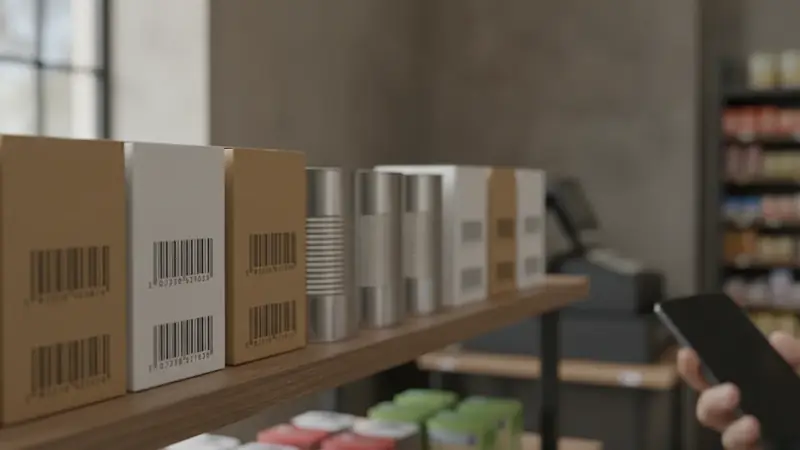
UPC stands for Universal Product Code. It is the 12-digit number under the black bars on most packaged goods sold in North America. The bars are just a machine-readable copy of those digits.
One code points to one product version. A blue size-10 sneaker and the same sneaker in black get different codes, even if they look nearly alike on the shelf. That is why a UPC code lookup is so precise when it works.
UPC vs EAN vs ISBN vs SKU
These four get mixed up constantly, mostly because they all show up as a string of digits on a package. Only one of them is made up by the store.
| Code | Length | Who assigns it | What it identifies |
|---|---|---|---|
| UPC | 12 digits | The brand or maker | A product, wherever it is sold (mainly North America) |
| EAN | 13 digits | The brand or maker | A product, used worldwide; a UPC is effectively an EAN with a leading zero |
| ISBN | 13 digits (older books have 10) | The publisher | A specific edition of a book |
| SKU | Varies | One retailer | An item in that retailer's own inventory system |
So an EAN lookup and a UPC lookup are close to the same thing, and a good tool accepts either. A SKU is different: it only means something inside the store that printed it, so searching a SKU on the open web often gets you nothing.
How to look up an item by UPC
You have two routes. Type the digits into a search box, or point a camera at the barcode and let the app read it. The camera is faster and avoids typos, which matter more than you would think when one wrong digit lands you on a different product.
- Find the barcode, usually on the back or bottom of the box, or on the tag.
- Scan it, or type all the digits including the leading ones.
- Check the match: brand, name, size and color should agree with what is in your hand.
- Look at the prices and listings that come with it.
Step three is the one people skip. If the product named does not match the item, the code may be damaged, a store-printed label, or a multipack with its own number.
Real examples: a shoe box, a blender, a paperback
Say you are holding a box of running shoes. Brands print the code on the end label, next to the size and colorway. A nike upc lookup (or any other brand's) lands on that exact size and color, beyond the shoe family, which is useful when the same model comes in a dozen versions.
A blender at a big-box store usually has the maker's UPC on the carton, plus a store sticker with its own SKU and price. Ignore the sticker for lookup purposes; scan the maker's bars.
A paperback has an ISBN under its barcode, and for books a free barcode lookup by that number is the quickest way to pin down the edition. If you want to know what an old hardcover might sell for, a book value scanner works from the same barcode, though condition changes the answer a lot.
What the number does not tell you
The code identifies the product. Full stop. It does not contain the price, the store, whether the item is on sale, or whether the copy in your hand is new or used. Two shelves can sell the same UPC at very different prices on the same day.
It also cannot say much about unbranded goods. Plain or generic items may have no useful code at all, or only get similar matches. And prices, availability and matches vary, so confirm the details and final cost with the retailer before you buy.
Using Price ID for a UPC scan
Price ID reads the barcode, identifies the product, and then does the part the number cannot: it shows current buying prices from online stores, with direct store links, the lowest price found for your shopping region, and the price range. If you are standing in an aisle, that answers the real question: is this cheaper online?
On iPhone or iPad (iOS 18 or later), a upc scanner app is what you get when you install Price ID; look for "What's It Worth: Price Scanner" in the App Store. On Android, Price ID works as a barcode scanner app too, and you can share an image from another app straight into it.
For used items, buying prices and resale estimates are shown separately. The resale range comes from current used-item asking prices on eBay, not completed sales, so read it as an estimate and not an appraisal.
No barcode, or it has worn off? You can take a photo instead and add a short text hint. Other tools make sense for other jobs: a shopping barcode scanner is for in-store checks, while a stack of used paperbacks calls for a different kind of lookup.
Quick questions
What does UPC stand for?
UPC stands for Universal Product Code. It is a standard 12-digit number that identifies one specific product, and it is usually printed under a barcode on the packaging.
Is a UPC code 12 digits or 13 digits?
A UPC code is 12 digits. The 13-digit version is called an EAN, which is the format used in most countries outside North America, and a UPC can be written as an EAN by adding a leading zero.
How to read a UPC barcode?
The bars are read by a scanner, but you can read the same information from the digits printed beneath them. The first digits generally identify the manufacturer, the next group identifies the product, and the final digit is a check digit used to catch errors.
What is the difference between UPC and SKU?
A UPC is a standardized number shared by every seller of the same product, while a SKU is an internal code a single store or seller makes up to track its own inventory. The same product can carry one UPC and a different SKU at each retailer.
Can a UPC lookup tell me the price?
No, a UPC lookup only identifies the product, because the code never contains a price. Prices are set by each seller and change over time, so you need to check retailer listings after you know what the item is.
What is a UPC code?
A UPC code is the 12-digit number printed under a barcode that identifies one specific product version. It is assigned by the brand or maker, not by the store.