


What is an AI shopping assistant, exactly?
It is a chat that gives product advice so you don't have to read twenty tabs. The useful ones start from a real product, not a vague question.
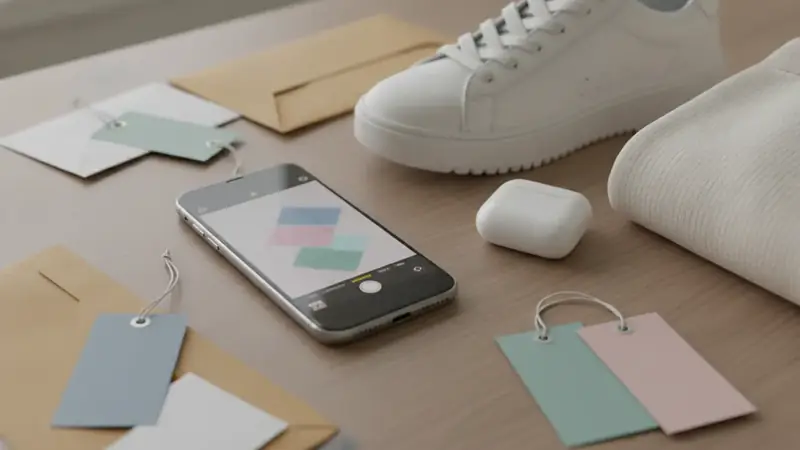
In Price ID, you scan first. You take a photo, pick a screenshot or saved image, or scan a barcode, and the app identifies the item with visual matches and AI. The Deal Assistant then sits on top of that result. You can add a text hint before searching if the photo alone is ambiguous.
What does the Deal Assistant actually tell you?
The Deal Assistant (Pro) covers five things: key features, pros and cons, cheaper alternatives, whether the item is worth the asking price, and the best time to buy.
- Key features: what the product does, in a few lines instead of a spec sheet.
- Pros and cons: the trade-offs, so you see the downside before checkout.
- Cheaper alternatives: other products that do the same job for less.
- Worth the asking price: a judgment you can argue with.
- Best time to buy: general timing advice for that kind of product.
Treat the last two as opinions. They are useful, and they are not guarantees.
What does the rest of the app do before you chat?
The chat is only as good as the scan under it, and the scan does most of the work. Price ID lists matching listings with direct store links, compares prices across available online stores, and shows the lowest price found for your shopping region, plus a price range and potential savings.
If you ask where can i buy this online, that is the answer you want from the scan itself, before any chat. For used items, the app gives an estimated resale range with a typical price and example listings. New buying prices and used resale estimates are shown separately, so you don't mix them up.
Is it different from a normal price comparison?
Yes, mainly in what you start with. A plain app price comparison needs a product name or barcode; Price ID can begin with a photo, which helps when you don't know the brand.
There are 11 finders tuned per category: Clothes & Outfits, Handbags, Sneakers & Shoes, Makeup & Beauty, Watches, Jewelry, Electronics, Furniture & Home, Toys & Collectibles, Shop a Screenshot, and What's it Worth. A dupe finder looks for lookalike styles from other brands. A single tap scans your latest screenshot. And in a store, you can scan a barcode and check whether the item is cheaper online.
What can AI shopping advice not know?
It can't see the final price at checkout, your local store's stock, or the condition of a used item in your hand. Prices, availability and matches vary, so confirm details and the final cost with the retailer. Generic, unbranded things usually come back as similar items only.
Resale numbers have their own limit. They come from current asking prices on eBay, not completed sales, so they are estimates and not a guaranteed sale price or an appraisal. Condition, model and included accessories change value.
When the assistant says "buy now" or "wait," it is reasoning from general patterns. Nobody can see next month's price.
Is there an AI shopping app for iPhone, and what does it cost?
Yes. Price ID is an ai shopping app you can get on iPhone and iPad (iOS 18 or later); on the App Store it is listed as "What's It Worth: Price Scanner." It is free to try with limited free scans daily.
The Deal Assistant needs PriceID Pro, which is $5.99 per week or $39.99 per year (App Store prices, November 2026). Whether that is worth it depends on how often you buy. If you shop for one big item a year, the weekly plan can be enough; if you scan every week, yearly costs less.
Does it work as a shopping assistant app on Android?
It does. On Google Play it is listed as "Price ID: What is This Worth?" and works as a shopping assistant app with a free tier: the first scan is free, then one free scan a day, plus up to two extra a day by watching a short video. The free tier shows ads.
Pro, weekly or yearly, removes the limits and the ads. You can also share an image from another app straight to Price ID, which is handy for saved posts. Choose your shopping region and currency; language is set separately, and it works in all countries.
Are there cheaper ways to get the same help?
Partly. The free scans already give you identification, store links, lowest price and the resale range, so you can judge many purchases yourself. Pro adds the written reasoning.
You can also save finds into collections, share them, and set reminders to re-check prices. That is a reminder to look again, not price tracking. If a friend sent a photo of a gift idea, you can find gifts from photo and weigh the options without paying for chat at all.
Quick questions
How is artificial intelligence being used in retail?
Retailers and shoppers use artificial intelligence for product recommendations, visual search, price tracking, demand forecasting, and chat-style customer support. On the shopper side, it mostly helps identify products, compare options, and answer questions about a specific purchase.
What to not ask an AI?
Avoid asking an AI for anything that needs live, verified facts, such as today's exact store price, stock levels, or a final checkout total. Also skip private data like passwords or card numbers, and do not rely on it alone for medical, legal, or financial decisions.
What is the 30% rule of AI?
The 30% rule is an informal idea that AI should handle roughly 30 percent of a task while a person does the rest, though there is no single official definition. People use it as a rough guide to keep human judgment involved, and versions of the rule differ between sources.
How to explain AI to an old person?
Describe AI as software that learns patterns from lots of examples so it can answer questions or recognize things, like a very well-read helper that sometimes makes mistakes. A concrete example helps, such as asking it whether a toaster is a fair price and then checking the answer with the store.
Can an AI shopping assistant tell me the best time to buy?
It can offer general guidance, such as waiting for seasonal sales or a new model release that lowers older prices. It cannot predict future prices with certainty, so treat the timing advice as a reasonable guess and confirm with the retailer.
Is the Deal Assistant free?
No, the Deal Assistant is part of Price ID Pro. Scanning itself is free to try, with daily limits.