


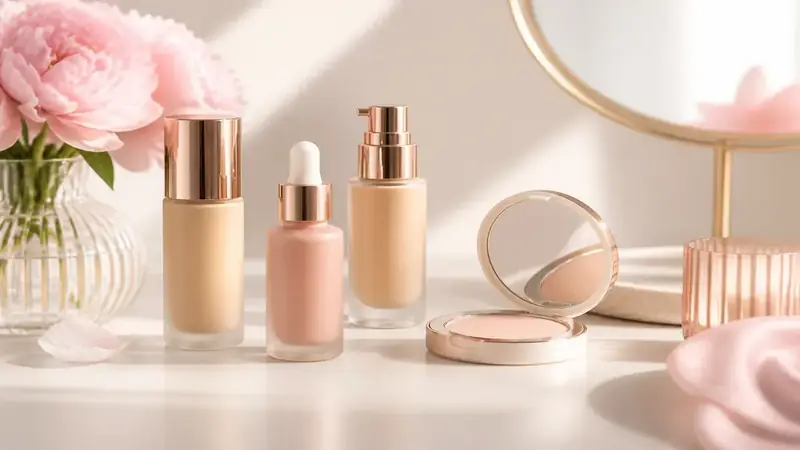
What identifies a makeup product
A dupe is a cheaper product meant to look or perform like a pricier one. Before you can find one, you need to know exactly what you're matching, and in makeup that comes down to a handful of small marks. The logo and bottle shape get you to the brand family. The sticker gets you to the actual item.
| Clue | Where to look | What it tells you |
|---|---|---|
| Shade name or number | Sticker on the bottom, back label, or outer box | The exact color in the line |
| Packaging shape | Whole tube, bullet, compact, pot, or palette | Brand and product family |
| Finish | Front label or box (matte, satin, shimmer, gloss, dewy) | How the product sits on skin or lips |
| Formula type | Line name on the front: liquid, cushion, stick, powder, balm | Texture and which version you have |
| Undertone | Shade name or letter code (warm, cool, neutral) | Why two similar colors can look different on you |
Foundation shade codes are the easiest to misread, since many lines use a letter plus a number. Lipsticks more often use a name. Write down whichever you see.
How to photograph makeup for a good match
Shoot the closed product first, label facing the camera, in daylight from a window instead of under a ceiling light. Glossy caps throw glare, so tilt the item until the logo is readable.
Then take a second photo of the bottom sticker, flat and close enough that the shade number is sharp. If you have the box, photograph that too. For a palette, get the whole thing in one frame with the shade names visible.
You can also add a text hint, such as "matte red lipstick" or "medium foundation", to focus the search. Screenshots work as well. A saved image of a product from social media is fine, though a cropped photo with no label will only get you a general match.
What Price ID returns for makeup
Pick the Makeup & Beauty finder, one of 11 finders tuned by category, and add your photo. Price ID identifies the product with visual matches and AI, including brand and name when they're recognizable.
- The product itself, with matching listings and direct store links.
- Where to buy: prices compared across available online stores, the lowest price found for your shopping region, and the potential savings.
- Similar for less, a lookalike section for cheaper products from other brands.
Listings for rentals, monthly plans and junk are filtered out. If you're hunting for a gift, the same photo habit works with the gift ideas finder, which is covered on its own page.
Save a find into a collection if you want to compare a few options later, and set a reminder to re-check the price.
Putting the makeup finder on your phone
On iPhone or iPad (iOS 18 or later), search the App Store for "What's It Worth: Price Scanner", the store name for Price ID. Once installed, the makeup finder is one of the category choices at the start of a scan.
Android users find it on Google Play as "Price ID: What is This Worth?". There, the beauty product scanner works the same way, and you can share an image from another app straight into Price ID. The first scan is free, then you get one free scan a day, with up to two more by watching a short video.
Why a dupe can look different on your skin
This is the part no app can promise. A dupe that matches in a photo may differ in undertone, opacity, or how it wears. Foundation can shift as it settles; lipstick changes with your natural lip color. Screens also distort color, so a swatch picture is a hint, not proof.
Two products with the same finish name can still feel different. A matte from one brand may be creamy, another chalky. And a lookalike labeled "neutral" may lean warmer than the original.
If you're standing at a counter, test on your jawline or the back of your hand in natural light. Online, check the return policy before you commit to a shade.
Shades that come back almost right
Plain, unbranded packaging, such as a simple black tube with no logo, may only get similar matches. Brands also rename shades, redesign bottles, and keep a product name while changing the formula, so an older photo can lead to a newer version.
Palettes are another weak spot. Limited holiday editions can look alike while holding different shades. Match the pan layout and the shade names, since the lid alone won't tell you.
Prices, availability and matches vary, so confirm the details and final cost with the retailer.
What to check before you buy
- Shade name or number matches the sticker in your photo.
- Finish and formula type match, and the brand too.
- Size is the same; minis, testers and refills are priced differently.
- Total cost with shipping and tax.
- For a dupe, the undertone description and the seller's return terms.
Price ID shows buying prices for new items separately from resale estimates for used ones, so you can tell which kind of price you're looking at. If you're scanning a shelf item in a store, the barcode scanner can tell you whether it's cheaper online. For shopping any image, the shop by picture approach is explained on a separate page, and a product dupe finder for clothes, bags and decor is covered there too.
Quick questions
What is the difference between a makeup dupe and a makeup copy?
A makeup dupe is a lower-priced product that mimics the color, finish, or formula of a pricier one. It is usually sold by a different brand and does not copy the packaging or name. Results vary, so a dupe may match the look but not the wear time or feel.
How do you find a dupe for a makeup product?
Start with the shade, finish, and product type, such as a matte nude lipstick or a dewy medium-coverage foundation. Then compare swatches and reviews from several brands, and check the ingredient list for similar pigments, oils, or silicones. Testing in store or buying a small size helps confirm the match.
Are makeup dupes as good as the originals?
Some dupes come very close and some fall short, depending on the product. Color payoff, texture, and how long the product lasts are the things that most often differ. Reading reviews that show the dupe on skin similar to yours gives a better idea than the price alone.
Why does the same shade look different on different skin tones?
Skin undertone, depth, and natural oils all change how a pigment looks once applied. A foundation or lipstick that looks identical in the tube can turn warmer, lighter, or deeper on your skin. Checking a swatch on your jawline or lips in daylight is the most reliable test.
Do cheap makeup dupes use the same ingredients as high-end makeup?
Often they share similar types of ingredients, such as the same pigments, waxes, or silicones, but the exact formulas differ. Brands also vary in how finely they mill pigments and which fragrance or skincare additives they include. Comparing the ingredient lists side by side shows how close the formulas are.
What is a makeup dupe finder?
A makeup dupe finder identifies a product from a photo and suggests cheaper lookalikes. Price ID's Makeup & Beauty finder returns the product, where to buy it, and similar options for less.