


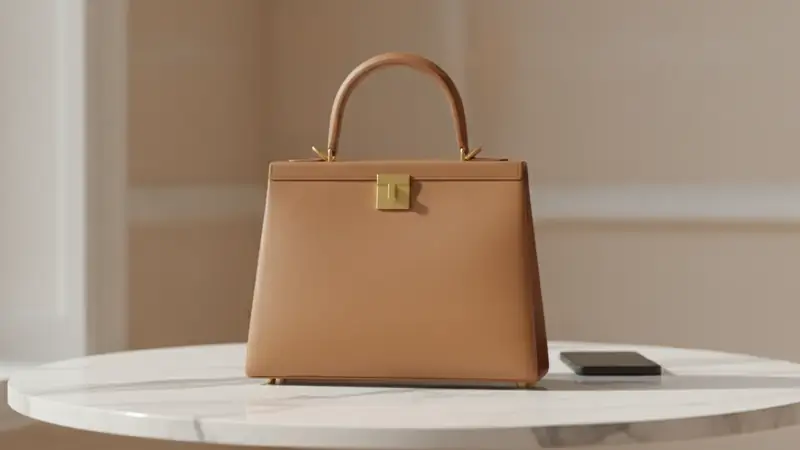
What identifies a handbag?
A bag identifier is whatever lets you tell one model from another: a shape family first, then small construction marks that brands rarely change. Logos are the obvious clue, but a logo can be blurry, rubbed off or added later. Hardware and stitching are harder to fake and harder to lose. Here is where to look.
| Clue | Where to look | What it tells you |
|---|---|---|
| Shape family | Whole bag, front and side | Tote, bucket, saddle, flap, hobo, or top handle; narrows the model list fast |
| Clasp and hardware shape | Closure, zipper pulls, chain links, feet | Signature turn-locks and chain styles point to a line |
| Handle anchors | Where handles meet the body | Rings, tabs, or stitched leather loops differ by model |
| Stitching | Seams, corners, handle bases | Stitch spacing and thread color separate lines and years |
| Edge paint | Strap edges and flap edges | Finish and thickness hint at material and maker |
| Lining | Inside the main compartment | Fabric, color and pocket layout change by season |
| Interior heat stamp | Inside wall or a leather tag | Brand name, sometimes country of origin |
| Serial or date code | Inside tag or under a pocket, on some brands only | Production details; not every brand uses them |
No single row settles it. A stamp plus the right clasp plus matching handle anchors is a much stronger case than any one of them.
How to photograph a bag for a good match
Stand the bag upright, empty, in daylight against a plain wall. Take one straight-on shot with all four edges in frame. That is the photo Price ID will lean on most.
Then take close-ups, one detail each: the clasp, a handle anchor, the corner, the lining, the heat stamp. Search the full view first, then repeat with the most distinctive detail. A sharp close-up of an unusual clasp can beat a distant shot of the whole bag.
- Stuff a soft bag lightly with tissue so it holds its real shape.
- Move the light, not a filter, when hardware glares.
- Crop out the outfit and the furniture, but leave the bag's edges.
- If you can, add a short text hint such as the color or a word from the stamp.
Already saw the bag in a screenshot or a saved picture? Pick that image instead; you don't need a fresh photo.
What the Handbags finder returns
Price ID has 11 finders tuned per category, and Handbags is one of them. It tries to name the brand and model when the bag is recognizable, then shows what you can do about it.
- Exact listings: matching bags with direct store links, with the lowest price found for your shopping region and the price range.
- Similar for less: lookalike bags from other brands, which is handy when the original is far out of budget or discontinued.
- Used value: an estimated resale range with a typical price and example listings.
New buying prices and used estimates appear separately, so you don't mix up a boutique price with a secondhand one. If you'd rather start from a different angle, the same engine can shop by image for any category.
Having the bag finder ready on your phone
On iPhone or iPad (iOS 18 or later), look for What's It Worth: Price Scanner in the App Store; it works as a bag identifier app once you open the Handbags finder. Android users find it on Google Play, where the free tier shows ads and gives you limited daily scans. Pro removes those limits.
For a quick tip on Android: you can share an image from another app straight into Price ID, which saves a step when the bag is in a message or a social post. That makes it a handy what is this worth app when you only have a picture and no bag in hand.
How much is a used bag worth?
Price ID's used range comes from current asking prices on eBay for similar used bags. Those are asking prices, not completed sales, so the range is a guide to where sellers are pitching, not a promise of what a buyer will pay. It is also not an appraisal.
Condition moves the number more than people expect. Corner wear, scuffed edge paint, a sticky lining, a missing strap or a missing dust bag all pull a price down. Size and color matter too; a mini and a medium of the same model are different products.
Curious about other categories? Asking what is this item worth for a watch works the same way, and if you're wondering how much is this watch worth, the Watches finder is built for that. For bags, the Handbags finder does the job.
Bags that share a shape with a dozen others
Bags are tricky because a model can keep its name while the details change. Strap width, hardware color, lining, pocket count and size can all shift between seasons. Price ID may land on the right family and the wrong year.
Plain or unbranded bags, including artisan and handmade pieces, may only get similar matches. That is a real limit; no photo tool can invent a brand that isn't there. In that case use the results to find similar products with the same shape, size and material, and treat any price as a rough guide. Read the seller's listing in full before you pay; results are a guide, and stock comes and goes.
Before money changes hands on a bag
- Compare size in inches against the listing, and don't lean on the word small or mini alone.
- Match the clasp, handle anchors and lining to the photos you took.
- Check what is included: strap, dust bag, authenticity card, box.
- Look at shipping, taxes, return terms and condition notes, as well as the headline price.
- Ask for clear photos of the interior stamp and any date code.
One rule for designer bags: a visual match is not authentication. Before you buy a used designer bag, or list one you have inherited, have a professional authentication service look at it. Keep receipts and dust bags; they help.
You can save a promising find into a collection and set a reminder to re-check the price later.
Quick questions
How can I tell what brand a handbag is?
Check the interior stamp or heat stamp, the hardware engravings, and the lining pattern, since most brands mark at least one of these. Brand-specific details such as a signature clasp, quilting style or monogram print also point to the maker.
How do I find a handbag name or model number?
Look inside the bag for a leather tag, a sewn-in label or a stamped serial code, which sometimes lists a style number. If there is no tag, compare the shape, hardware and handle design against the brand's catalog or resale listings to narrow down the model name.
How can I identify a designer bag with no logo?
Focus on construction clues: the shape, stitching, hardware finish, zipper pull engravings and lining fabric. Many designer bags are recognizable by silhouette alone, though plain styles often have several lookalikes and may only narrow down to a short list.
How do I tell if a designer handbag is real?
Examine stitching evenness, hardware weight and engraving, material quality, and the placement and font of interior stamps. No single sign proves a bag is genuine, so a paid authentication service is the safest check before a large purchase.
How much is a used designer handbag worth?
Value depends on brand, model, material, condition, color and whether the dust bag, box or receipt are included. Comparing current used listings for the same model gives a realistic range, and asking prices usually run higher than what bags actually sell for.
Can I find a bag from a photo or screenshot?
Yes, a clear photo or screenshot showing the full bag from the front often lets image matching find the same or a similar style. Extra close-ups of the clasp, handle anchors and interior stamp improve the odds of landing on the exact model.