


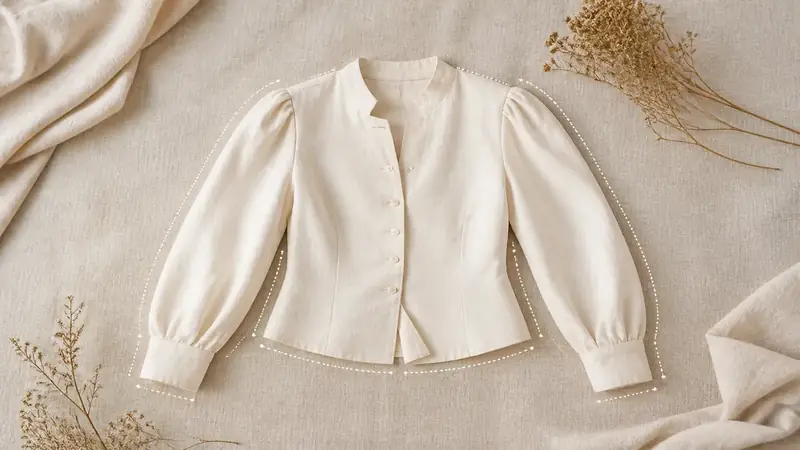
What identifies a piece of clothing
Clothing is harder to pin down than a gadget, because there is no single model number printed on the front. What you have is a pile of small clues, and some of them are only on the inside of the garment. If you own the piece, flip it over and read the tags. If you only have a photo, the visible clues do the work.
| Clue | Where to look | What it tells you |
|---|---|---|
| Brand label | Inside the back neck or the side seam | The maker, and sometimes the line or season |
| Style number | Care label or a small tag sewn into the seam | The exact product in the maker's catalog, often including color |
| RN number | Care or content label on US-made or US-sold garments | The company that registered the label, which helps trace an unmarked brand |
| Fabric content | Care label | Cotton, polyester, wool and so on; separates a true silk from polyester satin |
| Garment type and cut | The whole piece | Shirt dress or long shirt, wide-leg or straight, cropped or boxy |
| Print and repeat | Across the fabric | Scale and spacing of a floral, plaid or stripe, which narrows lookalikes fast |
| Logo placement | Chest, sleeve, hem, pocket, back yoke | Where a brand puts its mark is often a signature |
The RN number is a US detail worth knowing. It is a registration number on the label, and a faded or unreadable brand tag can still be traced through it. The style number is the better prize, though, because it points to one product, where the brand name only points to a company.
How to photograph an outfit so each piece matches
Layers confuse any search. A blazer over a dress over boots is three searches, so treat it as three.
- Frame one garment so its full outline is in the shot, edges included.
- Use daylight if you can. Indoor yellow light shifts color, and a navy can read as black.
- Shoot straight on. A steep angle bends hems and hides necklines.
- Keep hands, hair, bags and caption text off the piece.
- For prints, add a second close shot of the fabric so the repeat is readable.
Already have the look as a saved image? Pick it from your photos or use a screenshot. On Android you can share an image from another app straight to Price ID. You can also add a text hint such as "linen wide-leg pants" to point the search at the right garment in a busy picture.
What Price ID returns for clothing
Price ID identifies the item with visual matches and AI, and names the brand when it can recognize it. For each match you get listings with direct store links, a comparison across available online stores, the lowest price found for your shopping region, and the price range with potential savings.
New prices and used estimates sit apart. If the piece is secondhand, the resale range comes from current used-item asking prices on eBay, with a typical price and example listings. Those are asking prices, not completed sales, and the range is not an appraisal. Size, condition and whether it is the current season all move the number.
Clothes & Outfits is one of the 11 finders in the app, so the matching is tuned for apparel. Got a dress photo in particular? The same finder answers where to find this dress, and a shoe crop is how you find these shoes.
Shop the look on iPhone and Android
On an iPad or iPhone running iOS 18 or later, a clothing identifier app is just the App Store listing called "What's It Worth: Price Scanner"; open the Clothes & Outfits finder and snap or pick your photo. Free scans are limited each day.
On Android, the Google Play listing is "Price ID: What is This Worth?" and its outfit finder works the same way. You get a first scan free, then one free scan a day, with up to two more by watching a short video. The free tier shows ads.
Screenshots are the fast route for social posts. One tap scans your latest screenshot, which suits a look you saved from a feed. And if all you have is a clip, you can screenshot the frame where the piece is clearest, since that is the easiest way to find a product from a short video.
Garments that only return lookalikes
Clothing has more near misses than most categories. Fast-fashion pieces are reworked, sold out, or sold under another name. Vintage and handmade garments often have no catalog page at all. A plain black tee with no logo has hundreds of twins.
- Plain, unbranded pieces may only get similar matches.
- Sheer, draped or heavily printed fabric photographs badly and can confuse the cut.
- A creator's mirror selfie at a tilt hides the hem and the label.
- Color names differ between stores; "sage" at one is "olive" at another.
When the exact piece is gone, use Similar for less. It is the dupe finder, and it looks for lookalike styles from other brands, which is often what you wanted anyway. What the store shows at checkout beats any number on a results screen.
Sizing, fabric and seller checks for clothes
Before buying, compare the match against your photo: neckline, sleeve length, hem, closure, and print scale. Then read the listing's fabric content and measurements, because a size M is not the same everywhere. Check shipping and the return policy too, since clothes are the item you will most likely send back.
Selling a piece you own? Photograph the brand label, the care label and any style number, and note flaws. Used asking prices are a ceiling to test, not a promise, so price a little under the typical listing if you want it gone quickly. Save finds into collections, share them, or set a reminder to re-check a price later.
If a bag is part of the outfit, you may also wonder how much is this bag worth; the same scan gives you a resale range for it, kept separate from new prices.
Quick questions
Can I take a picture of an outfit and find it online?
Yes, a clear photo or screenshot of an outfit can be used for a visual search that returns matching or similar garments from online stores. Search one piece at a time, such as the jacket, then the pants, because a whole-outfit photo gives weaker matches than a single garment.
How can I find clothes using an image?
Upload or take a photo of the garment in a visual search tool and look through the product matches it returns. Crop tightly to one item, use good light, and add details like color or cut in a text hint if the tool allows it.
How to find where a dress is from?
Start with any label, tag, or seller listing, then run a visual search on a clear photo of the dress. If the original post names the brand or tags it, that is usually the fastest route to the exact style.
Where can I find this top?
Screenshot or photograph the top with the full garment visible, then run an image search to see stores selling it or something close. Details such as neckline, sleeve length, fabric texture, and print help narrow the results.
What is the 3-3-3 rule for clothes?
The 3-3-3 rule is a capsule wardrobe idea where you pick three tops, three bottoms, and three pairs of shoes and mix them into outfits. It is meant to simplify getting dressed and cut down on clutter, and the exact version varies by who describes it.
Can I find this outfit from a picture?
Yes, though you search it one garment at a time. Crop or hint at a single piece, and Price ID returns matches, buying prices and similar options.